
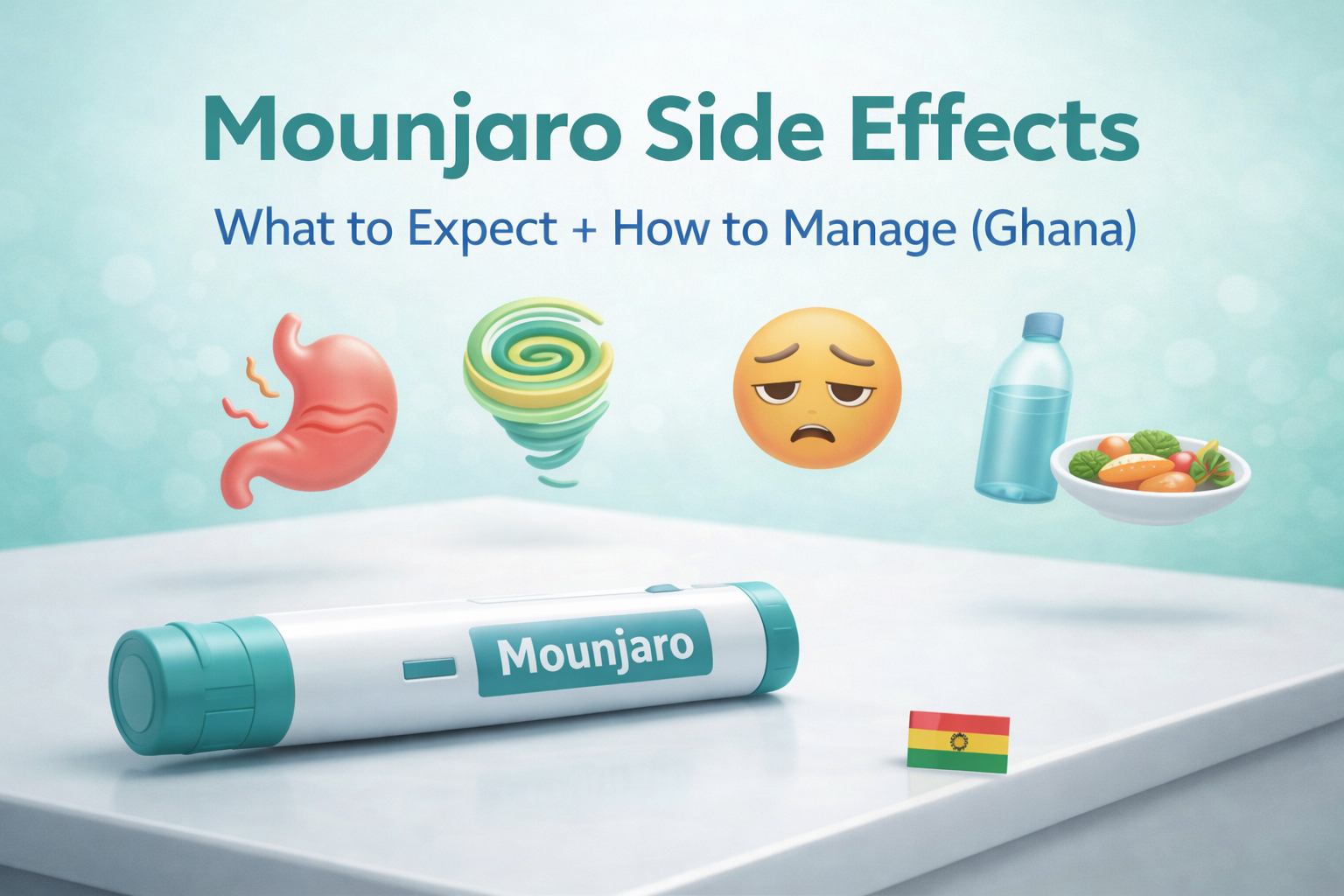
Mounjaro Side Effects: Why People in Ghana Search This Every Day
If you’re using Mounjaro (tirzepatide) in Ghana, one of the first things you will notice is this:
Mounjaro works strongly — but it can also affect the stomach.
So naturally, people search for:
-
“Mounjaro side effects”
-
“Why am I feeling nauseous on Mounjaro?”
-
“Mounjaro constipation remedy”
-
“Mounjaro makes me tired”
-
“How to stop vomiting on Mounjaro”
-
“Is this normal?”
This article explains the most common Mounjaro side effects and how to manage them safely.
Why Mounjaro Causes Side Effects
Mounjaro works mainly by affecting:
-
appetite signals in the brain
-
digestion speed
-
blood sugar regulation
Because it slows digestion and reduces appetite, your stomach and intestines can react, especially when you:
-
start the medication
-
increase dose
-
eat heavy oily meals
-
eat large portions
Most side effects are not because the medication is “bad.”
They are often because the body is adjusting.
The Most Common Mounjaro Side Effects
Let’s break them down clearly.
1) Nausea
Nausea is the most common side effect.
It usually happens:
-
in the first 1–2 weeks
-
after a dose increase
-
after overeating
-
after oily foods
How to reduce nausea (practical Ghana tips)
-
Eat smaller meals (don’t eat like normal)
-
Avoid fried foods on injection day
(fried rice, fried chicken, oily stew, waakye with too much oil) -
Eat slowly
-
Drink water in small sips
-
Avoid overeating at night
2) Constipation
Constipation is very common, especially in Ghana where many meals are heavy.
This happens because:
-
digestion slows
-
appetite reduces, so you eat less
-
hydration becomes low
How to manage constipation
-
Drink more water daily
-
Add fruits like pawpaw, oranges, bananas (moderate)
-
Add vegetables and soups
-
Take light walks after meals
-
Reduce heavy swallowing meals (too much fufu, banku, kenkey)
Many people fix constipation just by improving hydration and fiber.
3) Diarrhea
Some people experience diarrhea, especially:
-
after dose increase
-
after spicy meals
-
after fatty foods
What helps
-
Reduce oily foods
-
Avoid too much pepper
-
Eat lighter meals for 2–3 days
-
Hydrate properly
4) Stomach Pain / Discomfort
This can feel like:
-
bloating
-
gas
-
cramps
-
heaviness in the stomach
It is often linked to:
-
eating too much
-
eating too late
-
eating oily meals
What helps
-
Eat earlier in the day
-
Reduce portion sizes
-
Avoid overeating
-
Choose lighter meals
5) Fatigue / Weakness
Many people in Ghana complain:
-
“Mounjaro makes me tired”
-
“I feel weak”
-
“My energy is low”
This can happen because:
-
you’re eating less calories
-
blood sugar changes
-
dehydration
-
poor sleep
-
body adjusting
What helps
-
Ensure you eat enough protein
-
Don’t skip meals completely
-
Hydrate daily
-
Sleep properly
Some fatigue improves after the first few weeks.
6) Reduced Appetite (Not Always a Problem)
This is actually one of the main reasons people use Mounjaro.
But sometimes appetite reduction becomes too strong, causing:
-
weakness
-
headaches
-
dizziness
What helps
-
Eat small balanced meals
-
Avoid starving yourself
-
Add protein and soups
7) Acid Reflux / Heartburn
Some people experience:
-
burping
-
reflux
-
heartburn
This is usually worse when:
-
you eat late at night
-
you eat spicy foods
-
you eat heavy meals
What helps
-
Eat earlier
-
Avoid too much pepper
-
Reduce fried foods
-
Sleep with head slightly elevated
When Side Effects Are Strongest
Mounjaro side effects are usually strongest:
✅ Week 1–2
Your body is adjusting.
✅ After dose increase
Example: 2.5mg → 5mg or 5mg → 7.5mg.
✅ When diet is not adjusted
Mounjaro punishes heavy oily meals.
How to Reduce Side Effects: The Best Strategy
Here’s the truth:
The best way to reduce side effects is not “medicine.”
It is:
Portion control + lighter meals + hydration
Mounjaro works best when you treat it like a lifestyle reset.
Foods That Commonly Trigger Side Effects in Ghana
This is not to scare anyone — it’s to help.
These meals can worsen nausea or reflux if eaten heavy:
-
fried rice + chicken
-
jollof with too much oil
-
waakye with oily stew + gari + spaghetti
-
fufu with heavy soup late at night
-
banku with okro (very heavy portions)
-
very spicy meals
-
alcohol
You don’t need to stop Ghana food — just reduce portion sizes and timing.
What is Normal vs What is Dangerous?
Most mild side effects are normal.
But you should seek professional help if you experience:
-
persistent vomiting
-
severe dehydration
-
severe stomach pain that does not improve
-
signs of allergic reaction (swelling, breathing issues)
-
severe weakness or fainting
This is why professional guidance matters.
Why People Quit Mounjaro Too Early
Many people stop within the first 2–3 weeks because of side effects.
But in many cases, side effects reduce after:
-
the body adjusts
-
meals become lighter
-
hydration improves
The people who get the best results are usually the ones who stay consistent.
Final Thoughts
Mounjaro is a powerful medication, but it is not meant to be used carelessly.
Side effects are common, especially in the early weeks, but they can often be managed with:
-
smaller meals
-
less oily food
-
more water
-
patience during dose increases
If you’re using Mounjaro in Ghana, the goal is not rushing.
The goal is safe, consistent progress.
✅ FAQs (SEO Optimized)
1) What are the most common side effects of Mounjaro?
Nausea, constipation, diarrhea, fatigue, reduced appetite, and stomach discomfort.
2) How long do Mounjaro side effects last?
Many side effects reduce after the first 2–4 weeks or after your body adjusts to a dose.
3) Does Mounjaro cause constipation?
Yes, constipation is common because digestion slows and many people eat less and drink less water.
4) Why do I feel tired on Mounjaro?
Fatigue can happen due to reduced calories, dehydration, or your body adjusting to appetite changes.
5) Can I stop Mounjaro if I feel sick?
Do not stop or change your medication without professional guidance.
6) What foods should I avoid on Mounjaro?
Heavy oily meals, overeating, spicy foods, and late-night eating can worsen side effects.
7) Is vomiting normal on Mounjaro?
Mild nausea is common, but frequent vomiting is not normal and should be discussed with a healthcare professional.
8) When should I seek medical help?
If you experience severe vomiting, dehydration, severe stomach pain, or allergic symptoms.
✅ Medical Disclaimer
This article is for educational purposes only and does not replace professional medical advice. Mounjaro (tirzepatide) is a prescription medication and should only be used under the guidance of a qualified healthcare professional. Do not start, stop, or change your dosage without medical supervision. Side effects vary by individual and medical history.



 No products in the cart.